
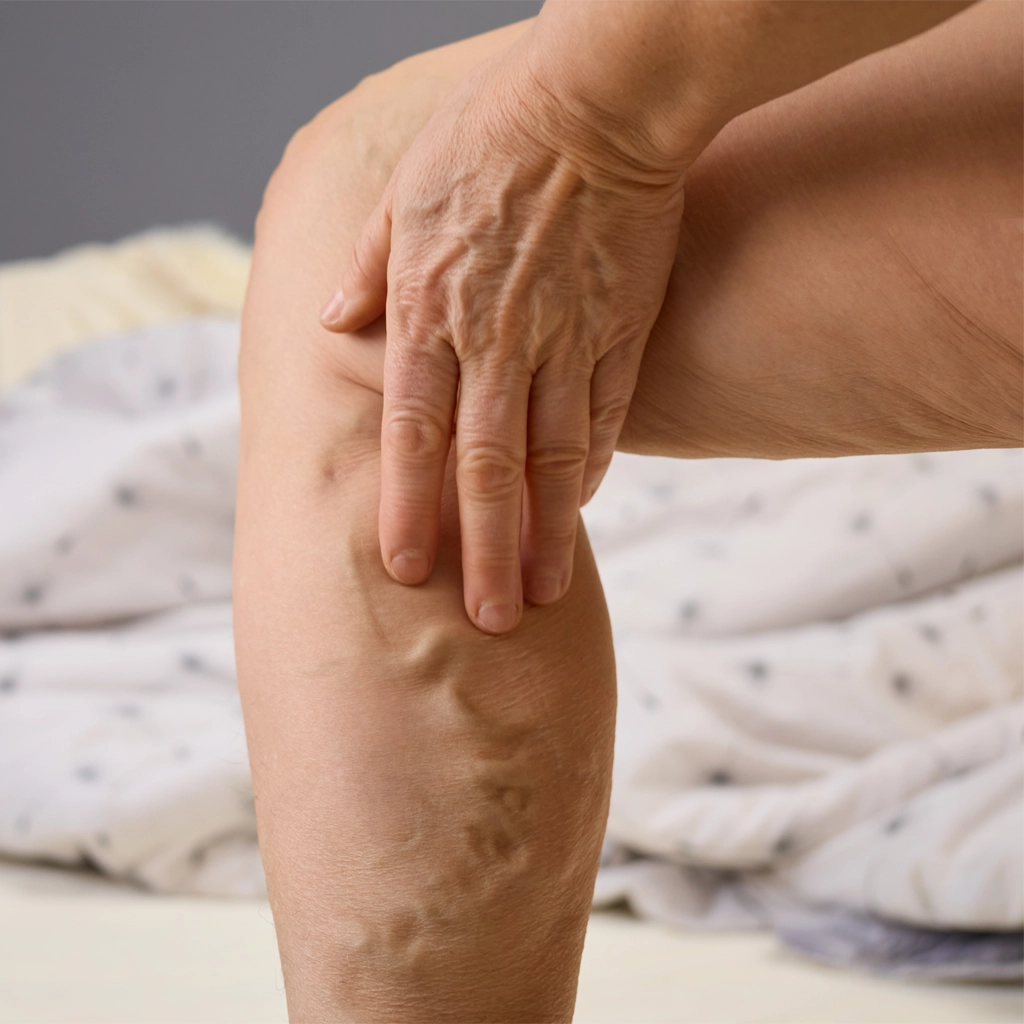
What causes varicose veins?
Venous reflux is the condition that causes varicose veins. Valves in the veins that prevent blood from flowing backward become weakened, allowing blood to pool in the veins, enlarging them.
There are many possible causes of varicose veins including heredity, being overweight, pregnancy, and prolonged standing or sitting.
How are varicose veins diagnosed?
In many cases, varicose veins are spotted visually. However, the underlying cause–venous insufficiency–may be diagnosed after a physical examination or imaging tests. If an imaging test is required to visualize the veins in the legs and measure blood flow, a test called duplex ultrasound is typically recommended.
What if I don’t treat varicose veins?
Varicose veins are not life-threatening, but left untreated, they can worsen over time and lead to chronic venous insufficiency or more severe problems, such as worsening discomfort and swelling, skin changes, venous leg ulcers, deep vein thrombosis (DVT) or superficial vein thrombosis (SVT). These are more serious conditions that could lead to a pulmonary embolism.
What are my treatment options?
The most common conservative treatment for varicose veins is the wearing of compression stockings to improve blood flow. The stockings are tightest at the ankles, which forces blood out of the superficial veins and into the deep veins in the legs. This can reduce pressure and swelling, and may alleviate some symptoms.
When the veins are small and near the surface of the skin (spider veins), they can be treated with sclerotherapy, a procedure that injects a special solution into the veins that causes them to collapse.
If the affected veins are larger and rise above the surface of the skin, there are several minimally invasive treatments available. Only in rare cases is surgery (vein stripping) used to remove varicose veins.
At VISA, we offer non-surgical, effective and minimally invasive treatments for varicose veins, including radiofrequency ablation (RFA).