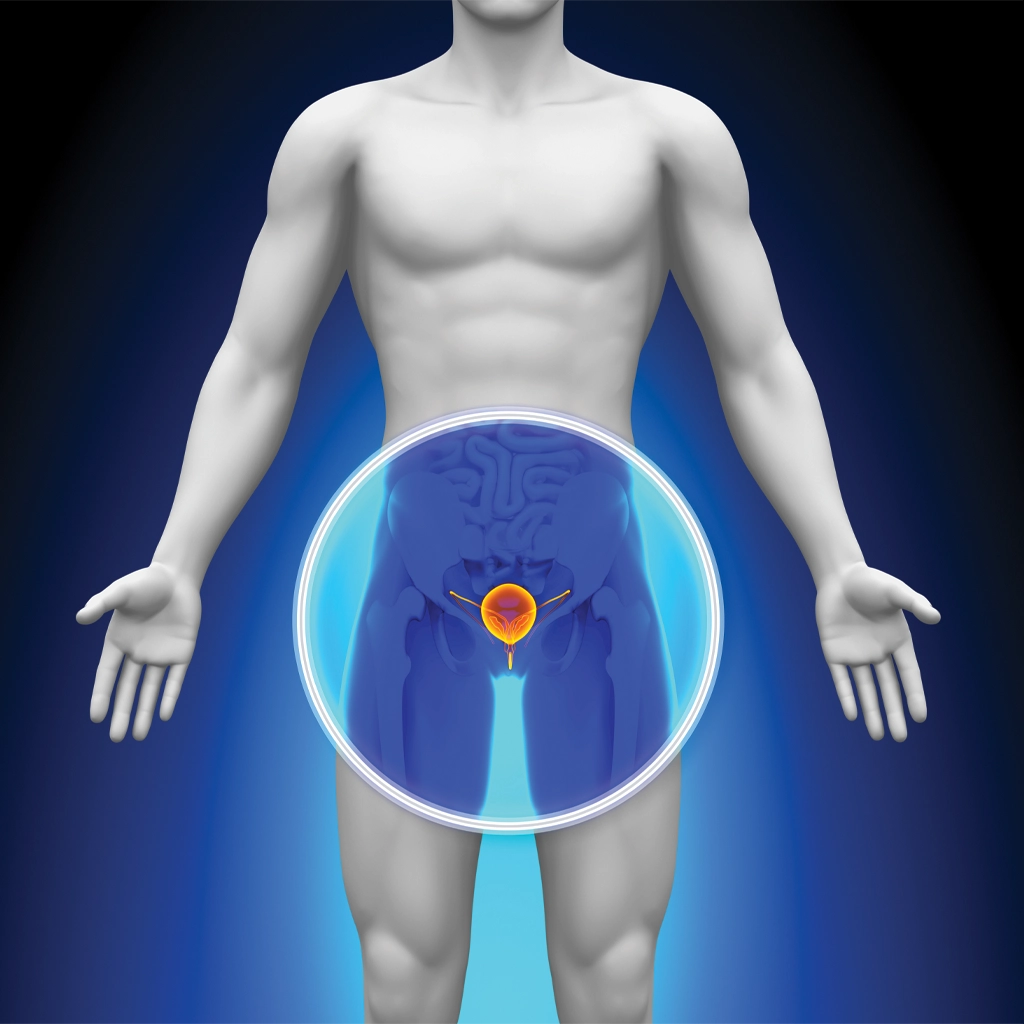
Enlarged Prostate (BPH)

As men age, their prostate gland grows larger. As it grows, it puts pressure on the bladder and the urethra, the vessel that carries urine from the bladder and out of the body.

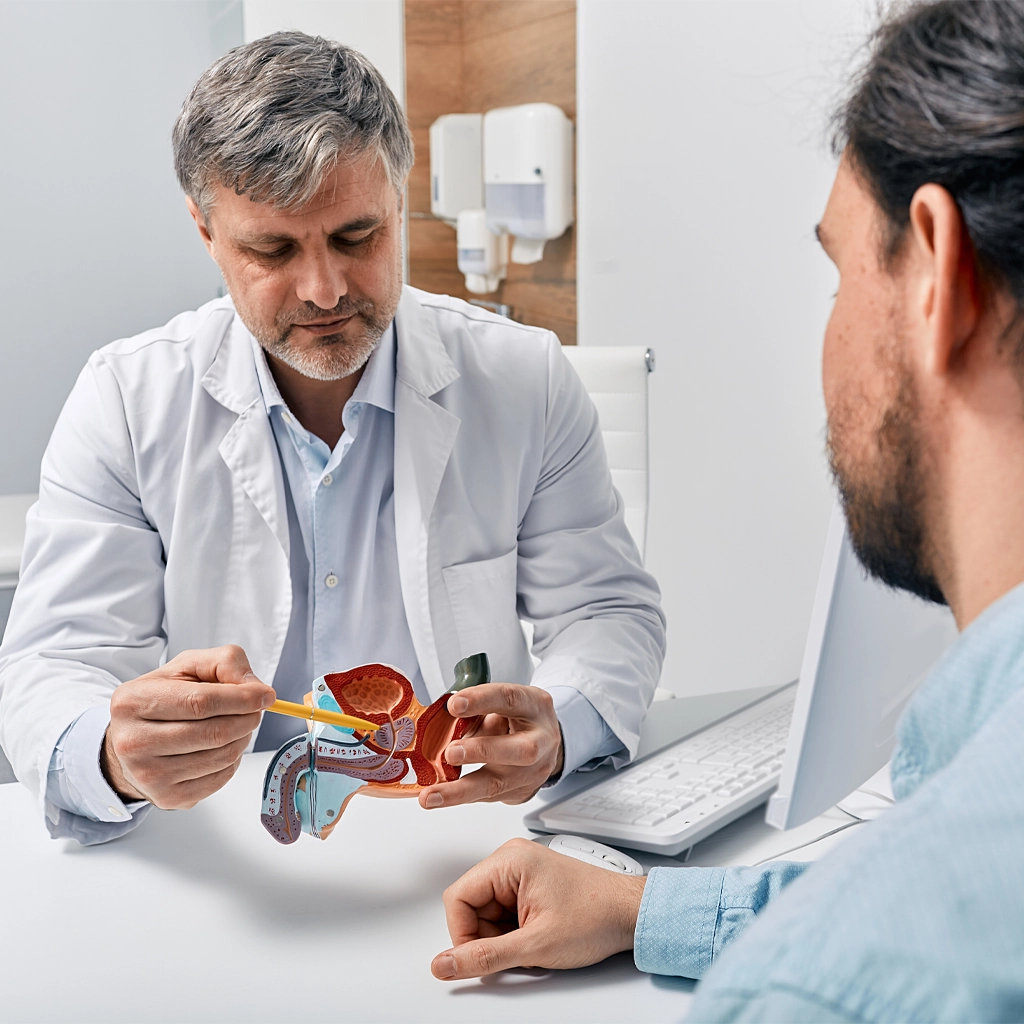
This condition, called benign prostatic hyperplasia or BPH, is typically uncovered with a digital rectal examination during a doctor’s physical. In addition, a PSA test, MRI, or ultrasound may provide a more definitive diagnosis.

What causes BPH?

The prostate gland is located just below the bladder. As it grows larger, it can press against the urethra, the tube that carries urine out of the body through the penis. A growing prostate is thought to be the result of hormonal changes and aging, as well as other factors such as family history, being overweight, diet, and having diabetes or heart disease.

It most commonly occurs in men over age 50 and affects most men by the time they reach 80.1 An enlarged prostate will not go away on its own; left untreated, symptoms will likely worsen and lead to other problems.

Symptoms of an Enlarged Prostate:

  • Increased frequency of urination (every 1-2 hours)
  • Nocturia (waking up multiple times at night to urinate)
  • Urgency (a sudden, strong need to urinate)
  • Weak urine stream
  • Difficulty starting or stopping urinating
  • Incomplete emptying of the bladder
  • Dribbling/leakage
  • Straining to urinate

Less common symptoms include:

  • Retention (the inability to urinate)
  • Urinary tract infections
  • Blood in the urine
  • Bladder stones
  • Kidney damage

What are my treatment options?

Men with mild BPH symptoms can be treated with lifestyle changes, medication or supplements. Your doctor may also ask you to avoid taking certain medications like decongestants or certain antihistamines that can affect your prostate.

Those with more severe symptoms have many treatment options, including surgery. The most common surgery for an enlarged prostate is called transurethral resection of the prostate (TURP), in which a surgeon cuts away a portion of the prostate to make it smaller. However, this surgery has potential side effects that include infection, urinary issues, sexual dysfunction and retrograde ejaculation.2,3

Some urologists now offer a less invasive procedure called UroLift®. This involves implanting metal clips that physically lift the urethra away from the prostate. While it can alleviate urinary symptoms, it does not address the root cause of the problem—the enlarged prostate. As a result, it has not been shown to improve sexual function in men who have the procedure.

A minimally invasive, outpatient procedure called prostate artery embolization (PAE) was approved by the FDA in 2018 and has become an excellent option for most men with BPH. Performed by an interventional radiologist, PAE effectively shrinks the prostate, reducing or eliminating urinary symptoms. It is also shown to improve sexual performance.4

  1. Barry M, Roehrborn C. Management of benign prostatic hyperplasia. Annu Rev Med. 1997;48:77-189
  2. Joao G Porto et al. Evaluating transurethral resection of the prostate over twenty years: a systematic review and meta-analysis of randomized clinical trials. World J Urol. 2024 Nov 15;42(1):639. doi: 10.1007/s00345-024-05332-3
  3. Gideon Koren et al. Retrograde Ejaculation – A commonly Unspoken Aspect of Prostatectomy for Benign Prostatic Hypertrophy. Am J Mens Health. 2020 Mar 7;14(2):1557988320910870. doi: 10.1177/1557988320910870
  4. Thomas Wong MD et al. Prostatic Artery Embolization and Sexual Function: Literature Review and Comparison to Other Urologic Interventions. Techniques in Vascular and Interventional Radiology Volume 23, Issue 3, September 2020.

International Prostate Symptom Score (I-PSS) Questionnaire

This field is for validation purposes and should be left unchanged.

In the past month:

1. Incomplete Emptying: How often have you had the sensation of not emptying your bladder?(Required)
2. Frequency: How often have you had to urinate less than every two hours?(Required)
3. Intermittency: How often have you found you stopped and started again several times when you urinated?(Required)
4. Urgency: How often have you found it difficult to postpone urination?(Required)
5. Weak Stream: How often have you had a weak urinary stream?(Required)
6. Straining: How often have you had to strain to start urination(Required)
7. Nocturia: How many times did you typically get up at night to urinate?(Required)